The Kunstkamera (Museum of Anthropology and Ethnography) in St Petersburg, Russia
 |
| The Kunstkammer in February 2017 |
We visited St Peterburg in February this year. Having seen the city in the summer when it was very hot, we thought that it would be interesting to see the winter season. Yes, it was cold and it was the first time that I had seen a wide frozen river.
The Kunstkamera (Museum of Anthropology and Ethnography) is one of the first museums in the world. It was established by Peter the Great, an enlightened and intelligent monarch who started to collect curiosities. This was a fashionable educational pursuit at the time. The heart of the collection is still made up of exhibits collected during Peter's lifetime. It houses over one million ethnographic, anthropological and archaeological artefacts. This beautiful building, on the right in the photograph, was built to house the collection and opened in 1734.
The web site is
http://www.kunstkamera.ru/en/
Mobile app.
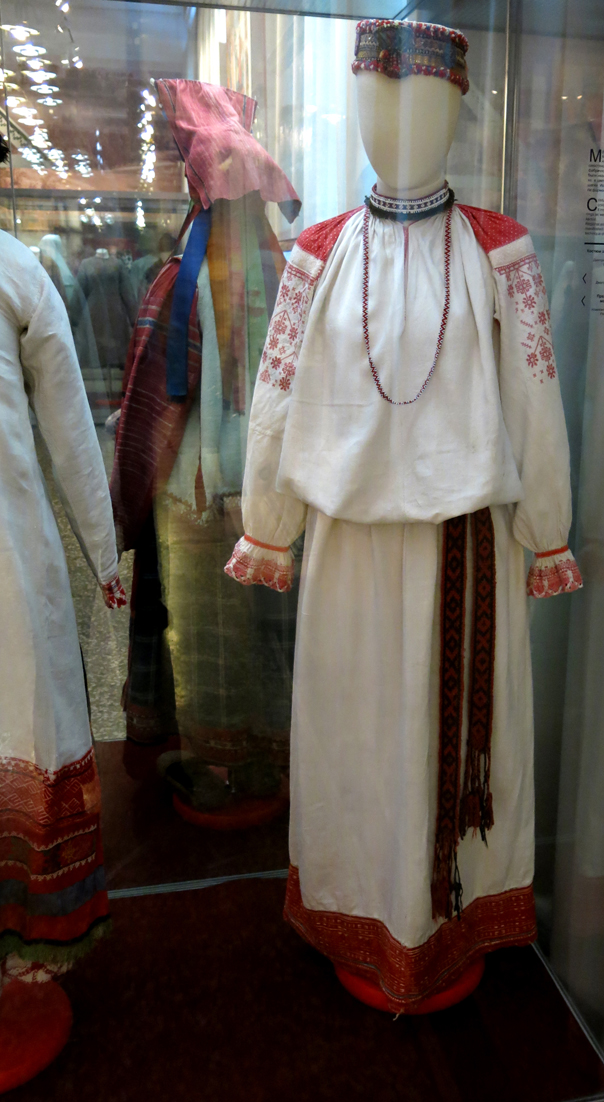
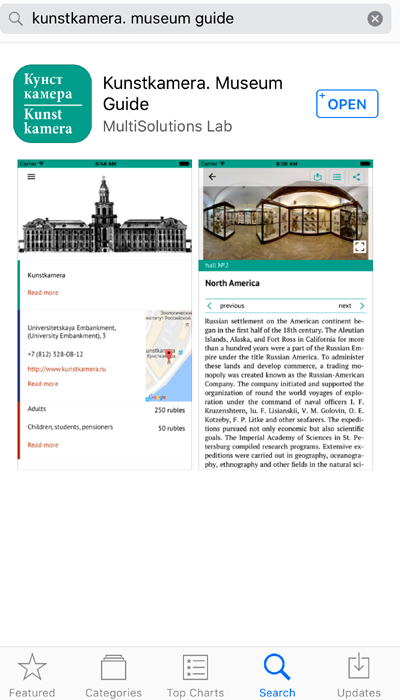
The museum houses a wonderful collection of clothing and artefacts from many cultures. The web site is good but the mobile app is wonderful. Going around the museum, I could upload information from QR points on the display cabinets. However, you do not need to go to the museum in person. You can browse the collection yourself by downloading this app for your mobile phone. It is free in the app store. There are lots of pictures and information about the exhibits.
 |
| The Kunstkamera Museum guide app. |
This app is very easy to use.
 |
| Start to browse by clicking on the museum guide. |
One you have clicked onto the museum guide you can explore each floor of the museum.
 |
| Floor one. |
On each floor you can virtually walk around and click onto any of the numbered display cabinets. You can enlarge each floor so that the numbered cabinets appear.
There is plenty of information and pictures of the exhibits to see in detail. This picture shows Floor One, Hall 4, Japan and case 33. Clicking on the case brings up the information and pictures. It is about Kabuki and Noh theatre in Japan.
Inside the museum.
Here I am wandering around the museum.
Here are some of the amazing garments from 19th century Alaska.
 |
| Close up of the border from the Alaskan coat. |
The border on the coat is particularly attractive.
The cabinets displayed the garments and other artefacts clearly. As you can see, many of the cases could be viewed from three sides which is very useful when examining textiles.
Here is a display of narrow band weaving from Africa. It is on Floor One, Hall 6 Africa, case number 8 if you want to see it on the mobile app. The textiles are gorgeous.
 |
close up of textiles.
|
My interest was taken by a Manchurian costume. This can be seen on Floor Two, Hall 9 China, Mongolia and Korea in case number 33 on the mobile app.
 |
| Costume from Manchuria with a woven belt. |
This was the only belt on display which is similar to belts from countries in northern Europe in particular to those in the Ukraine, Russia, Belarus, Latvia and Lithuania.
The central area has a pattern with 11 pattern threads on a background of half basket weave. There is a small pattern on either side which is a supplementary warp pattern on a background of warp faced plain weave. The fringe on the ends is used extensively in the Baltic area. Was this an export item?
I consulted David Rosier who is an expert on Chinese textiles. He took me through the history of the Manchu. (See my next blog in April on
Dressing to Impress).
As the Manchu took power in 1644 they had very clear ideas on the design of Court Costume but this was in terms of structure rather than designs/iconography. The Manchu adopted the Confucian based system of government and all the infrastructure that had existed in previous dynasties. As such they did little to change the iconography on costumes initially and this was adapted gradually up until 1759 when Emperor Qianlong undertook the most comprehensive review, revision and expansion of the costume regulations ever undertaken. This has not provided us with any specific design patterns attributed to this group.
However the Manchu evolved into traders in 16th and 17th century, in particular in fur and ginseng. They certainly had trade links with Russia. It may be that this belt was a commissioned piece. Of course, it may be an ethnic minority piece of China. More information is needed.
Thank you David, for your comments about this piece.
 |
| Close up of the ends of the belt. |
Weave pattern for 11 pattern threads.
Here is the weave pattern showing two of the motifs on the Manchurian belt with the cross pattern. There are 11 pattern threads. Each pattern is repeated twice with the cross motif in-between. The whole belt was not visible but there were eight patterns on the front each repeated twice and separated by the cross pattern. It would be lovely to be able to see the whole belt.
I have not had time to weave this pattern, but it is on my list of things to do.
Enjoy your virtual visit to the museum.
In a later blog I will show items from my visit to the Museum of Ethnography in St Petersburg. This is one of the largest museums of its type in the world and the collections are simply stunning. You can have a preview here.
http://eng.ethnomuseum.ru/
Peter the Great
 |
| The Bronze Horseman |
This is the statue of Peter the Great in St Petersburg. it is known as The Bronze Horseman.
The Hermitage Museum - The General Staff Building.
We visited the Hermitage Museum which now has a modern annex in the General Staff Building. The internal spaces of the building have been creatively altered to make a stunning new set of exhibition rooms.
 |
| The new staircase leading up to the exhibition rooms. |
 |
| The first exhibition space. |
 |
| Uniform of Peter the Great |
In the Hermitage, there is a portrait of Peter the Great wearing his military uniform with his sash being worn around the waist. Amazingly the actual uniform which dates to before 1709 is on display with the military sash near the original portrait.
Unfortunately I could not find out any further information about this uniform.
The sash interested me as I know that many military sashes are made using the sprang technique. I looked carefully at the sash in display but could not see the details that might identify the technique.
 |
| Close up of sash. It appears to have been striped but the colours have faded. |
During the International Conference of Braiding at Tacoma in July 2016, I went to a lecture by Carol James. She told the story of how she made a replica of a sprang military sash which had belonged to George Washington.
Carol has made a special study of military sashes made using the sprang technique.
Her YouTube video
How to Make a Sash using the Sprang Technique is excellent.
https://www.youtube.com/watch?v=WoFMeGNshcM
Carol recreated the red silk sash which tradition states was given to George Washington by Major General Edward Braddock. She has written a very useful guide to identifying a sprang sash. You can view the article here.
http://www.clothestellstories.com/index.php/sprang
Update
Unfortunately, I was unable to decide if the sash belonging to peter the Great was made by the sprang technique. However, Carol James has been in touch.
She sent me a photograph of a sash that she made which showed the S lean on the left and the Z lean on the right. This is diagnostic of the two-at-the-same-time work of sprang.
Take a closer look at the sash of Peter the Great.
 |
| close up of fringes of sash |
Look at this close up of the two fringes on the sash. Carol thinks that there is an S lean to the stitches on one end of the sash and a Z lean on the other. This, in combination with the chain-link-fence type of structure is diagnostic of sprang.
She also thinks that there looks like several different qualities of thread have been used to compose the different stripes in the sash. The manner in which the holes stay open, it looks like a stiffer material, perhaps linen.
Many thanks Carol for your comments about this military sash.
Special Exhibition at the General Staff Building.
I was very fortunate to be visiting in February as the special exhibition in this annex was about Mariano Fortuny - the great designer of the 20th century, celebrated by his contemporaries as “The Magician of Venice.” The Fortuny fabrics, especially the Delphos dresses were stunning.
The light levels had to be kept low but here are two images taken from Pinterest and the Met.
 |
| The Delphos Dress by Fortuny |
This dress and more can be seen on the Met web site at
http://www.metmuseum.org/
The shimmering bronze outfit is at
http://www.metmuseum.org/art/collection/search/81594
Ever since I first saw one of these dresses in a museum many years ago, I have longed to wear one!
Happy weaving.
Susan J Foulkes March 2017